
The outside of Christ Church differs little from many Anglican churches. However, once inside the building has more similarity to a synagogue than to a local parish church. The communion table and stained-glass windows contain Jewish symbols and Hebrew script, and like all synagogues in Jerusalem, the church faces the Temple Mount. On the Eastern wall of the church, the words of Jesus and the Apostles’ Creed are engraved in Hebrew.
In fact, the church was so Jewish in appearance that in 1948, when it became necessary to prove to an angry Jordanian Army that the unusual building was indeed a Christian house of worship, the then rector Rev. Hugh Jones hurried to the souk to buy an olive wood cross to place on the communion table.
Center of the church

Christ Church was built through out the 1840s and was consecrated 21 January 1849. 
Communion Table: The Hebrew inscription at the top says “Do this in remembrance of Me.” The center disc says Immanuel, the crown and Magen David symbolizing Immanuel is the king of Israel. The IHS monogram on the left is an abbreviation for Jesus name in Greek, IHΣΟΥΣ. 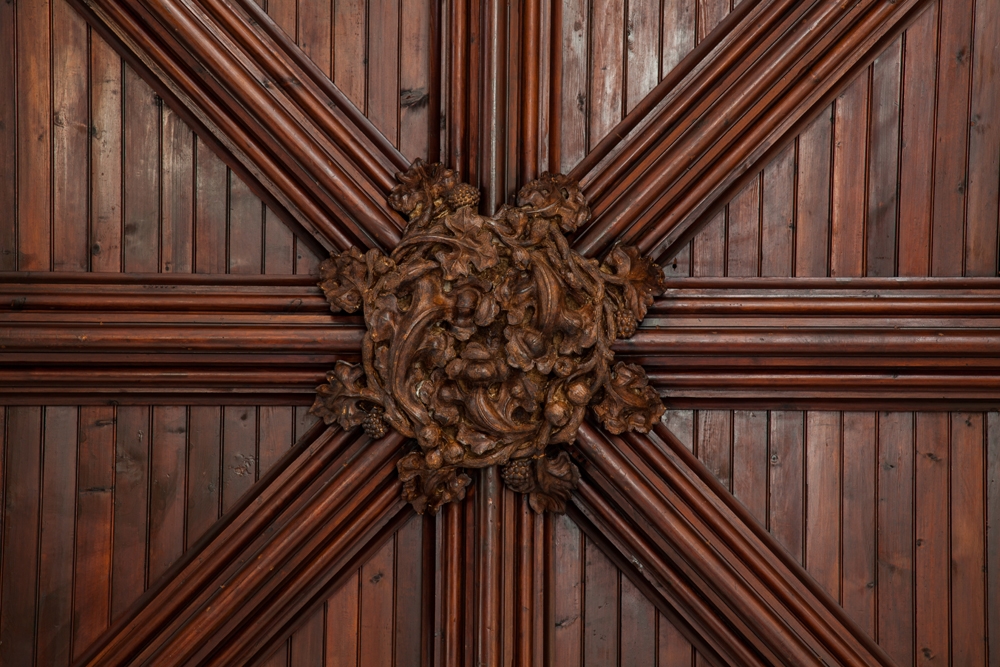
The ceiling is decorated with clusters of grapes and grapes leaves.
Apse (front of the church)

Apse and chancel 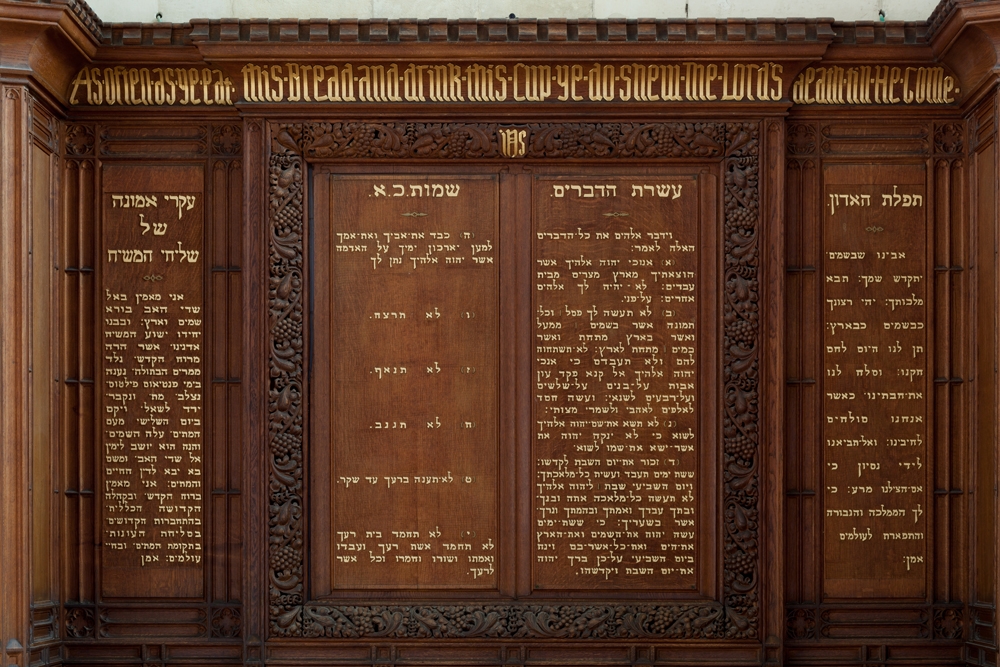
Altarpiece: The wood panels at the front contain, from left to right, the Apostles Creed, the 10 Commandments and the Lords Prayer. It reminiscent the Torah Ark that is at the front of a synagogue, but this one is perpetually open. The IHS written top center is an abbreviation for Jesus name in Greek, IHΣΟΥΣ. 
Tiles before altar: The three tiles on the edge of the platform quote the last three Hebrew words in Isaiah 60:13, translated in the King James Version as “I will make the place of my feet glorious.” These words mark this area as a holy place. 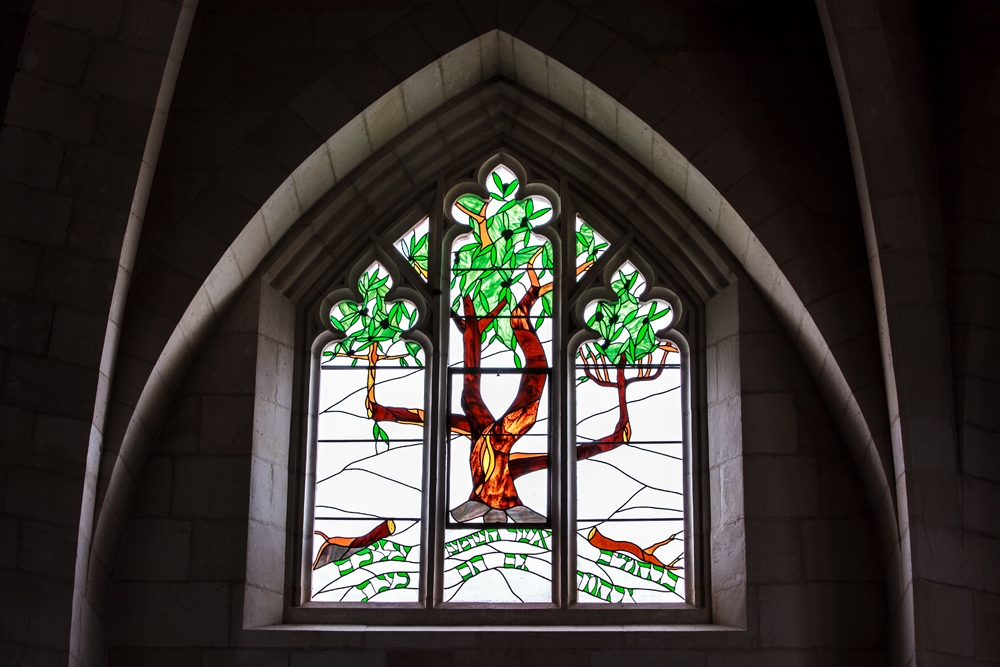
Olive Tree (left): The olive tree is taken from Pauls teaching on Gods mercy to the Jewish people in Romans 11:11-36. The text in Hebrew quotes Romans 11:32: “For God has consigned all to disobedience, that he may have mercy on all.” The two matching panels by Rick Wienecke on the right and left of the apse were installed in 1995. 
Front stained glass: This glass was installed after the apse was built in 1911. 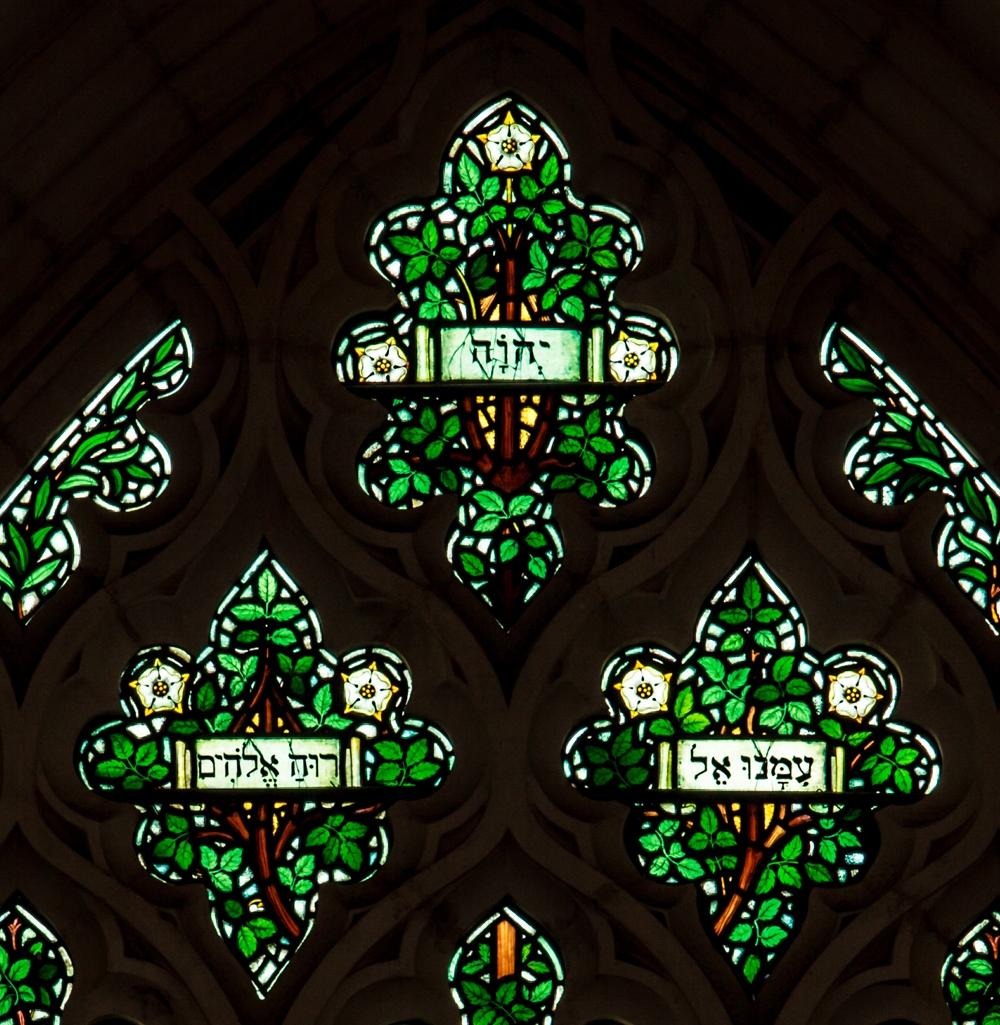
God: LORD, Immanu El, Spirit Elohim – The top of the stained glass has three names of God. On top is YHVH, the Tetragrammaton represented as LORD in many English translations. The right says, Immanu El, Hebrew for God with us, from Isaiah 7:14. The left says Ruach Elohim, Spirit of God, as first mentioned in Genesis 1:2. 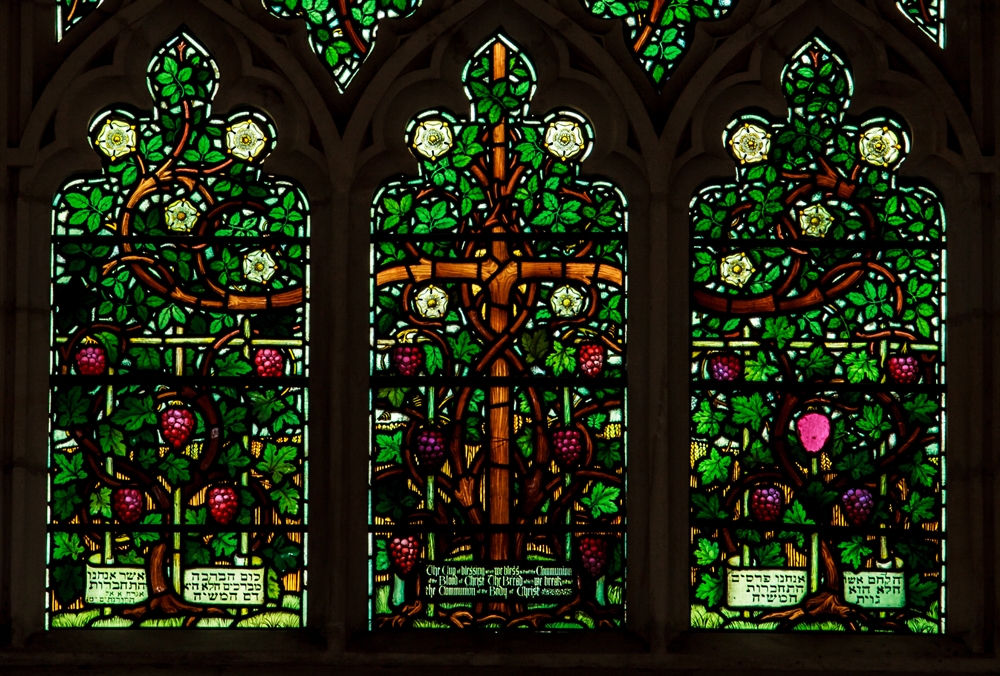
The Vine: The bottom half of the front window has a vine decorated with passion flowers, wheat, and grape clusters. At the very bottom — in English and Hebrew — is quoted 1 Corinthians 10:16: “The cup of blessing which we bless, is it not the communion of the blood of Christ? The bread which we break, is it not the communion of the body of Christ?” 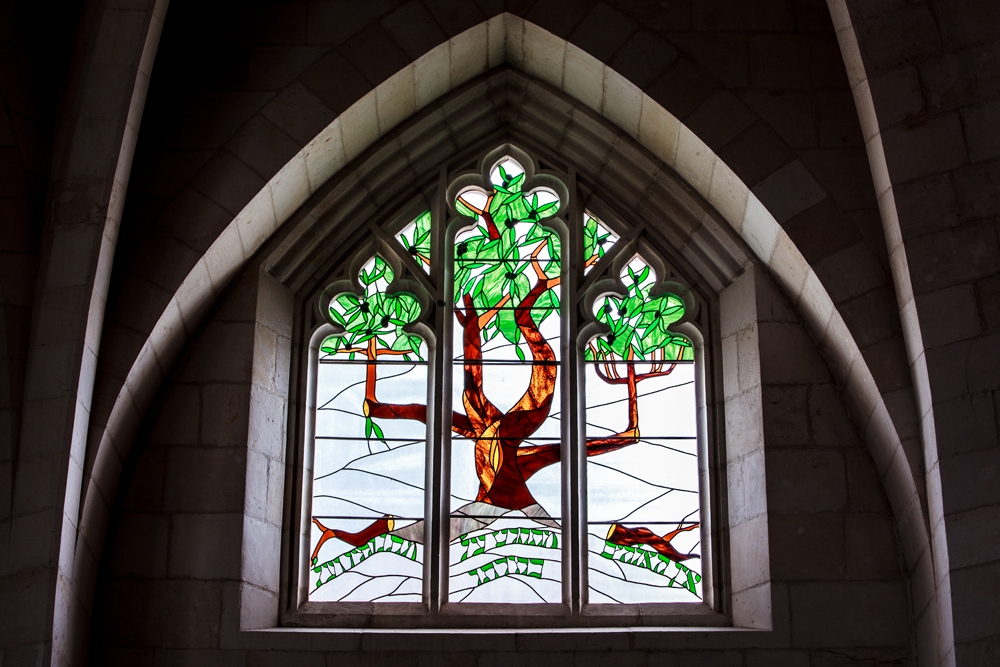
Olive Tree (right): The text in Hebrew quotes Romans 11:29: “For the gifts and the calling of God are irrevocable.”
Rear of the church
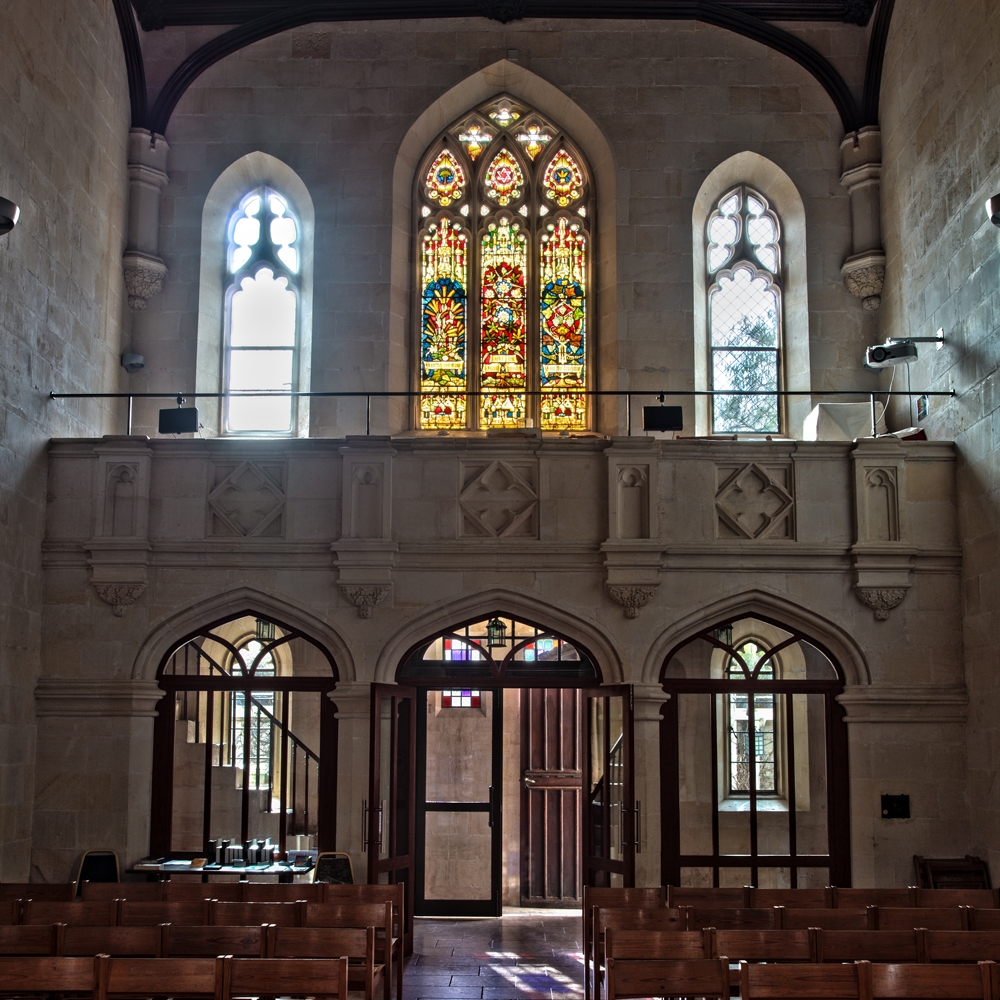
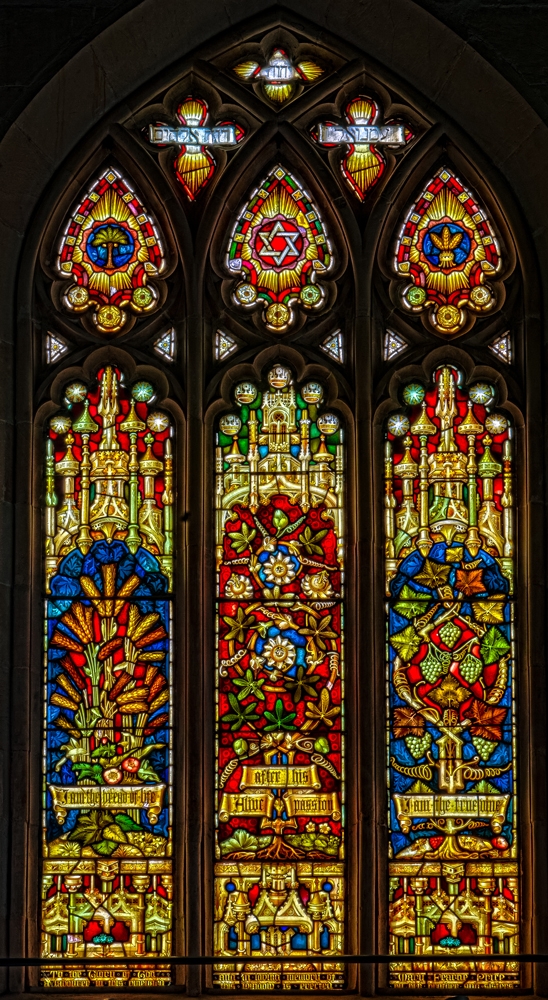
Rear stained glass window: This window depicts the Biblical seven species harvested in Israel: wheat, barley, olives, dates, figs, pomegranates and grapes. It also contains passion flowers, remembering Jesus passion and three names of the Trinity in Hebrew: Elohim (God), Immanuel (God with us) and Ruach Elohim (Breath of God). This glass was originally installed in the front from 1849 to about 1911. 
God: LORD, Immanuel, Spirit Elohim: The top of the stained glass has three names of God. The top is YHVH, the Tetragrammaton represented as LORD in many English translations. The right says, Immanu El, Hebrew for God with us, from Isaiah 7:14. The left says Ruach Elohim, Spirit of God, as first mentioned in Genesis 1:2. 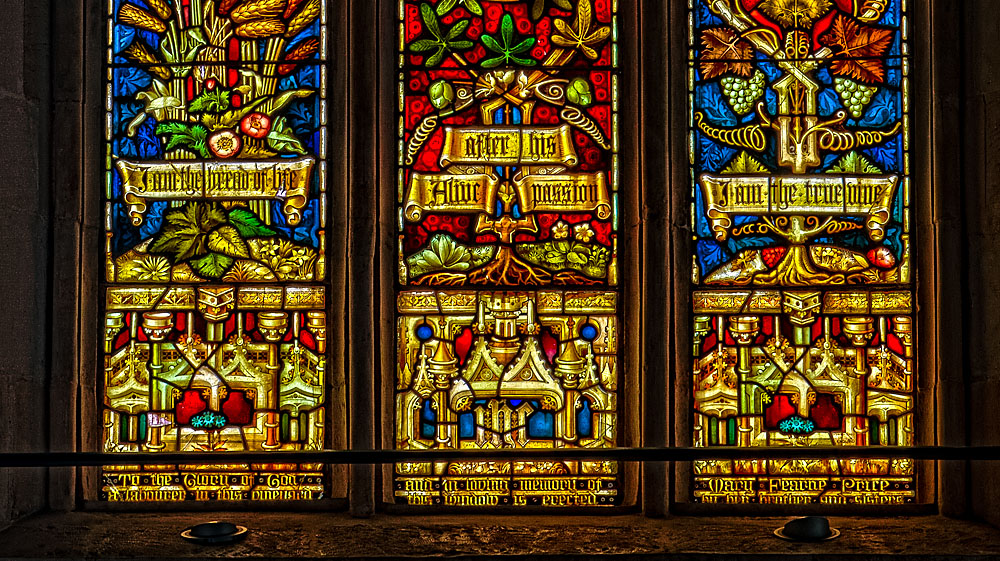
Glass dedication: In addition to text about Jesus Messiah, the glass is dedicated to “Mary Fearne Price, a labourer in this vineyard.”